


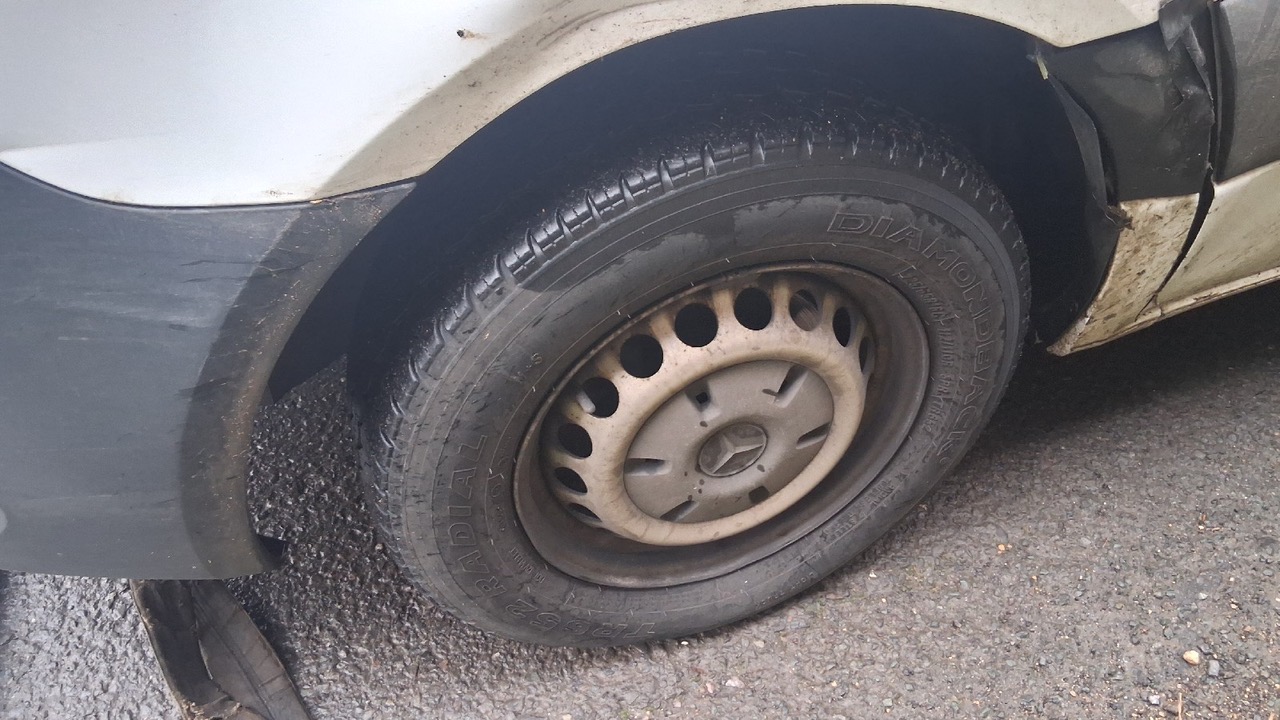

The owner of an independent Gloucestershire bakery is calling on Gloucestershire County Council to reconsider its decision not to compensate him after one of his business delivery vans sustained more than £4,000 worth of damage, which he says was caused by a pothole.
Ori Hellerstein, owner of The Artisan Baker, says the council has confirmed it was aware of the pothole before the incident but rejected his compensation claim under Section 58 of the Highways Act 1980.
The incident occurred on 8 March 2026 on the road between Box and George Street in Nailsworth. According to correspondence seen by Mr Hellerstein, Gloucestershire Highways said the defect was identified during a routine inspection on 11 February, added to a repair schedule and repaired on 11 March, three days after the incident.
Mr Hellerstein believes the council should have taken additional steps to reduce the risk to motorists while awaiting repairs.
“It’s a disgrace that the council is avoiding taking responsibility for a pothole it already knew existed.

“They have admitted the pothole had already been reported and was scheduled to be repaired just three days after our van was damaged. If they knew it was dangerous enough to repair, why wasn’t it clearly marked or made safe beforehand?”
Mr Hellerstein says there were no visible warning markings, temporary signs, cones or barriers at the location when the incident occurred.
He says the repair bill exceeded £4,000, placing unexpected financial pressure on the independent business.
“We pay road tax on every one of our delivery vans, we pay corporation tax, business rates and every other tax expected of a small business. Running a hospitality business is already incredibly challenging with rising labour costs, food prices, energy bills and increasing business rates. To then face a £4,000 repair bill because of a pothole that wasn’t our fault is simply unacceptable.”
Following the rejection of the claim, Gloucestershire Highways suggested Mr Hellerstein could refer the matter to his motor insurer. He believes that is not an appropriate solution.
“Telling us to claim on our insurance is not a solution. A claim would increase our premiums, and commercial insurance doesn’t always provide suitable replacement vehicles for businesses that rely on large delivery vans. Small businesses shouldn’t be forced to absorb costs caused by infrastructure failures.”
Mr Hellerstein has asked the council to review its decision and is requesting inspection records, maintenance reports and risk assessments relating to the pothole.
He also questions whether photographs supplied by Gloucestershire Highways demonstrate the condition of the road at the time of the incident.
“The council has supplied close-up photographs of a road closure sign and a repaired pothole, but none of the photographs are dated and there’s nothing to show they were taken at the same location or before our incident. At the time our van struck the pothole, there were no visible warning markings or signs alerting motorists to the danger.”
Mr Hellerstein says he is prepared to pursue the matter further if the council maintains its position.
“I’m determined to pursue this. If necessary, I’ll be seeking legal advice and asking our local MP to investigate why councils can acknowledge dangerous defects yet refuse to compensate the people and businesses who suffer the consequences.”
The Artisan Baker supplies customers and businesses across Gloucestershire using its fleet of delivery vans. Mr Hellerstein said he hopes speaking publicly will encourage greater accountability over road maintenance and help other motorists facing similar situations.
Cllr Mark Harris, cabinet member for highways at Gloucestershire County Council, said: “We have more than 30 teams working on Gloucestershire’s road network every working day to improve road conditions and have repaired more than 69,000 potholes in the past year. Potholes can develop quickly, particularly during periods of adverse weather, and it is not possible to inspect every road or repair every pothole immediately. Our highway inspectors assess roads across the county every day, and any defects that meet nationally recognised intervention criteria are prioritised for repair.
“High-priority safety defects are repaired within one working day, while other qualifying defects are completed within 28 days, in line with national standards. The 28-day repair period allows us to programme and group nearby works, helping us deliver repairs more efficiently and minimise disruption to road users. In addition, we respond to emergency safety defects, such as sinkholes or trees blocking the highway, within two hours. All compensation claims are assessed in accordance with national guidance and relevant legislation. This process considers the council’s highway inspection and maintenance records, and helps determine whether a claim is eligible for payment.”


